Understanding Transition
The dictionary defines transition as the passing from one condition, place, or activity to another. It’s a much more complex and time-consuming process than change.
For example:
- Painting a room or buying new furniture is a change.
- Moving to a new town, with new schools and surroundings, is a transition.
A transition requires mental and emotional adjustment over time—such as the unexpected loss of a companion or career. It may even involve redefining your personal identity.
When chosen, transition can bring enthusiasm and renewed purpose. When forced upon us, it can create doubt, grief, and questions about our future or self-worth.
Proactive vs. Reactive Transition
A transition can be proactive or reactive.
Proactive Transition
In a proactive transition, you make the choice. You recognize or create an opportunity for positive change and decide when to act. The transition grows from healthy dissatisfaction with the status quo.
Planning may take months or years, but once the move begins, excitement and energy offset fear of the unknown. There’s a strong sense of control over personal destiny.
Reactive Transition
In contrast, reactive transitions leave you feeling more like a victim than a victor. These shifts often come without warning—like a sudden breakup or job loss—and can trigger emotional shock or paralysis.
When change hits unexpectedly, people can lose their sense of identity. Psychologists note that many who lose long-term jobs still define themselves by their old position months later. Reactive transitions, if unmanaged, can erode confidence and self-worth.
Stages of Transition
How long and how deeply you move through transition depends on two factors:
- How much awareness you have of the coming change.
- How capable you are of adjusting to major life shifts.
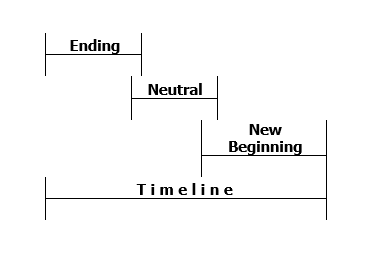
There are three emotional stages common to all transitions.
Stage One – The Ending
The first stage involves letting go. Every transition begins with an ending—the loss of an existing situation or identity. It closely mirrors the grieving process that follows the death of a loved one.
Typical stages of grieving include:
- Shock and immobilization
- Denial
- Anger
- Bargaining
- Grief
- Acceptance
At first, you might feel lost, confused, or drained. Denial sets in as you try to hold onto the past. Depression and frustration follow, bringing emotional exhaustion. Eventually, you realize that things have changed permanently, even if you don’t yet know what comes next.
Stage Two – The Neutral Zone
This stage sits between the old and the new. It’s often filled with confusion, alternating between hope and despair.
The neutral zone is an incubation period rich in creative potential. As outdated beliefs fade, new ideas start to form. Energy and optimism slowly return, and we begin to test possibilities for the future.
Moments of enthusiasm awaken, and you reflect on what the past meant. Slowly, the past and present merge, and momentum builds for what comes next.
Stage Three – The New Beginnings
The final stage is acceptance—embracing a new reality and forming a new personal identity.
Here, you integrate the lessons from the neutral zone into fresh goals and perspectives. Optimism replaces fear, and a renewed sense of purpose emerges. Energy rises, creativity restarts, and self-confidence fuels action.
Transition transforms from loss into growth.
Transition Timeline
The time it takes to move through these stages varies by person and situation. Sometimes the stages overlap or loop back—it’s normal to revisit old emotions before fully adapting.
If you find yourself stuck or moving slowly, personal counseling or support groups can help you regain momentum.