Associated Handouts
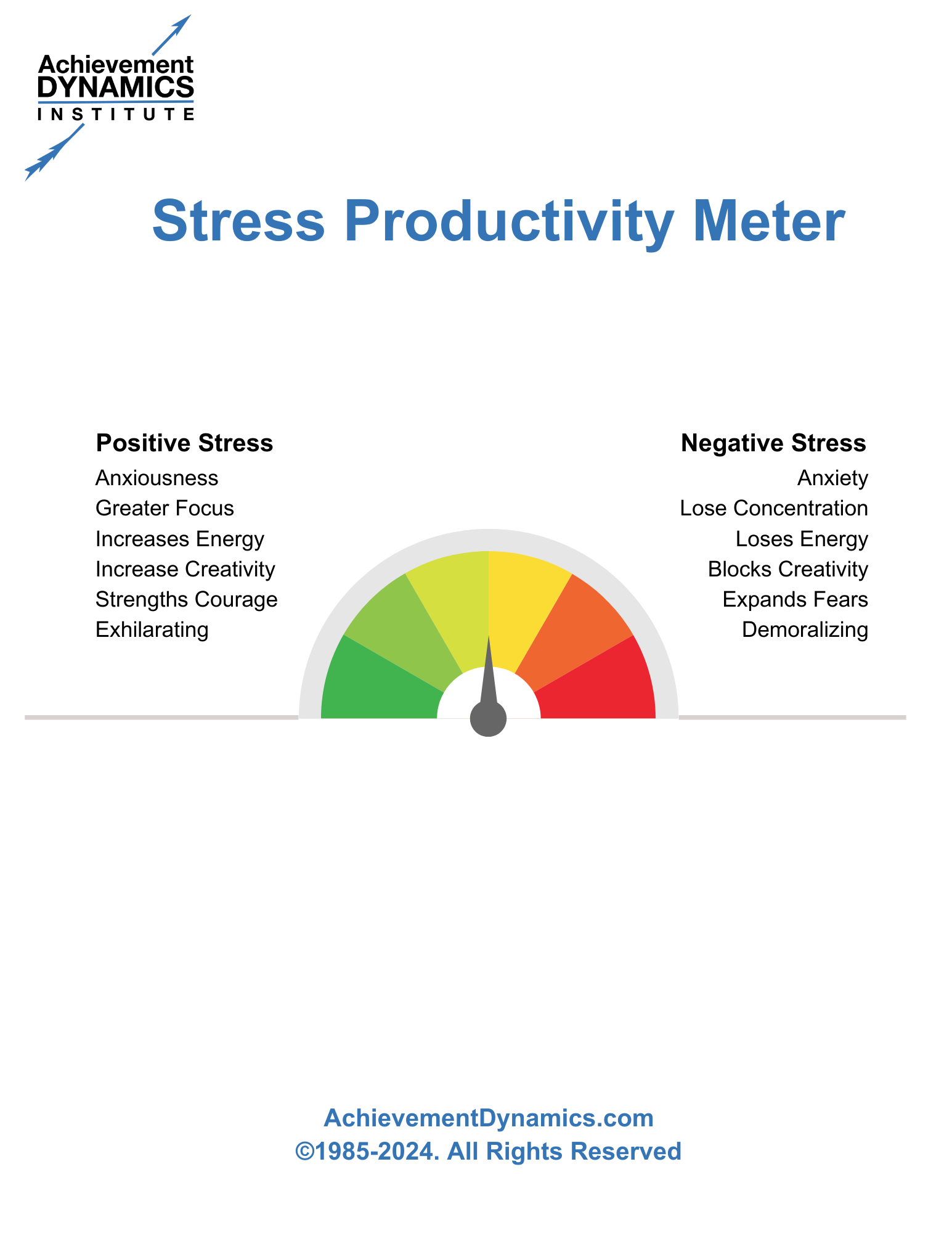
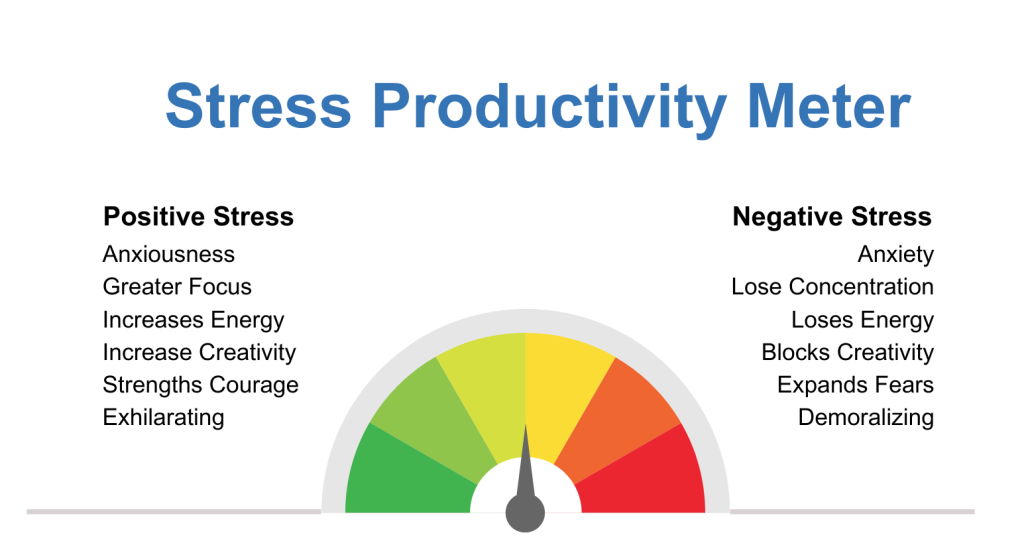
- Stress Productivity Meter
- Stress and Exercise
- Stress Reduction Hit-list!
- The Symptoms of Inner-Peace
How Would You Describe Your Most Recent Experience of Stress?
Understanding Stress
Stress is our inner reaction to the things that happen to us and the demands placed upon us.
Most people only see the external results of stress, but the complete picture lies inside. Stress occurs only when your internal reaction to an event feels uncomfortable or unpleasant. This reaction is your choice.
Different people interpret the same event in very different ways. Stress should not be confused with challenge, excitement, or motivation.
Taking an inventory of your stress is beneficial. You must first identify it before you can modify it.
Once you are aware of your stress, you can handle it more effectively.
Ways to Manage Stress
The following methods can help improve both the physical and emotional aspects of dealing with tension.
1. Time Management
Organize your schedule daily, weekly, monthly, and yearly.
Separate what is urgent from what is important.
Work by priorities and stay organized.
(Example: parenting movie, prioritizing family and work balance.)
2. Identify Bottlenecks
Find areas in your life where pressure builds up and create systems to reduce friction.
3. Use “No” Assertively
Don’t take on other people’s projects or responsibilities that don’t match your own goals.
Setting and Living by Goals
Goals help you:
- Gain control
- Provide direction
- Pace your activities
- Create a clear vision
- Build hope
Overcoming fears through clarity strengthens your confidence and increases your expectation to succeed.
Optimist vs. Pessimist
Health research shows that optimism directly affects well-being:
- After age 40, optimists have one-fifth the health problems of pessimists.
- By age 60, optimists have only one-tenth the issues pessimists experience.
Positive thinking truly supports physical and emotional health.
Meditation and Relaxation
Regular meditation helps regulate your body and mind:
- Reduce muscle tension
- Slow breathing: inhale for 1–5 seconds, exhale for 1–10 seconds
- Regulate your pulse
- Practice positive visualization daily
- Repeat positive affirmations daily
- Strengthen your faith or belief in a higher power
Diet and Exercise Tips
Avoid the following to minimize stress impacts:
- Large meals (eat small snacks instead)
- Caffeine
- Alcohol
- Excess sugar
- Starches
- Salt
- Sodas
- Getting too tired, too hungry, or too emotional
Build Positive Relationships
- Avoid negative people.
- Develop supportive, encouraging relationships.
- Create and maintain balance in your life.